
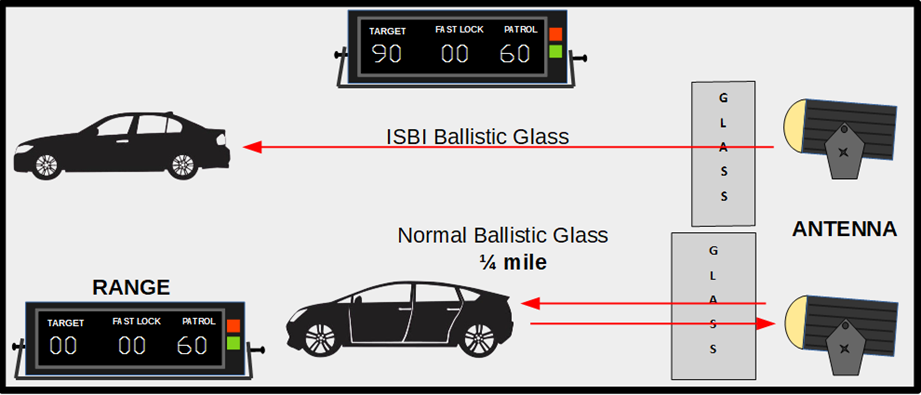
Once you install Ballistic glass in your patrol car, it affects how objects are viewed via the glass, the glass can have multiple effects on how an officer can function inside a Patrol Car. One effect is how the Radar functions, with a notice in reduced range, loss of Patrol Speed, beam width and the ability to read traffic.
Ballistic Glass uses laminations of both glass and Polycarbonate, as a beam passes via the laminations, this beam and in the Ballistics industry, among the top manufactures that prioritize integrity, they have a test which looks at the duplication of a headlight beam as it passes via the glass, into the poly and has a parllex shift that creates a second beam. The test looks at the separation of distance between the two beams to score if the glass is good or bad due to the optical illusion of separation, the less separation the better.
Radar Antennas in fact use glass and plastics as part of the Antenna design. These designs are tested for Type Acceptance by the F.C.C. in the United States. Placing Curved Glass, with several laminations close to the antenna can have an effect on the way the Antenna functions and the Radar presents the speeds. Type acceptance often looks at beam width and many agencies have a preference of an 11 to 13 degree Beamwidth for optimal use in traffic. Since the antenna effects the Beamwidth, the recomended remedy at this time is to mount the Antennas to the outside of the glass.
Law Enforcement have noted the decrease in Range and the ability to track targets via the Radar installed in patrol Vehicle with a Ballistic Windshield. The range is effected in two manners, one is that the return doppler signal is reduced and is a much weeker. The second effect is that the signal stays in the cabin and returns from fans and other forms of intereference raises the noise level. A higher noise level means less range or no display of return signal at all.
ISBI uses an all Glass design, and uses thinner glass that is also designed for Radio applications as in cell phones. The ability to reduce reflected energy inside the cab means a lower noice level.
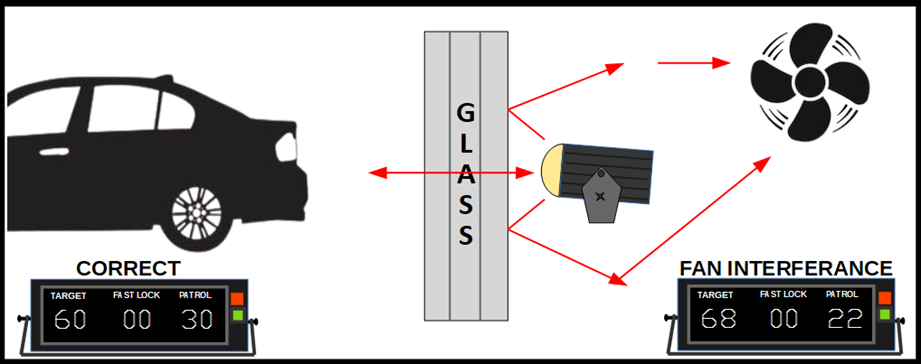
ISBI as an armourer has a history of working with electronic devices in the window, used for radio reception, heating, and radar aplications.